Haidora and sticks#12297

Recently, while walking in a forest, Haidora saw a stick of length . He picked it up and thought about dividing it into many pieces. For any possible division, denote the total number of resulting pieces by , and the length of stick (1 \leq i \leq k) by \text{len}_i.
Haidora does not like the usual ways to partition sticks that is why he wanted the lengths of the sticks to be strictly increasing, that is for any such that (1 \leq i < j \leq k): \text{len}_i<\text{len}_j.
Haidora is lazy and he does not solve easy problems so he asks you to find the maximum number of pieces he can divide the stick into and the maximum length of a stick among all possible divisions that has the maximum possible number of pieces.
Can you help Haidora solve this easy problem?
The first line contains one single integer (1 \leq t \leq 10^4) — the number of testcases.
The only line of each test case contains single integer (1 \leq n \leq 10^{18}) — the length of the original stick.
Output two integers — the maximum number of pieces that can be achieved under these constraints and the maximum possible length of a stick among all possible divisions that has the maximum possible number of pieces respectively.
Example 1
In the last test case we can have the optimal partition as following :
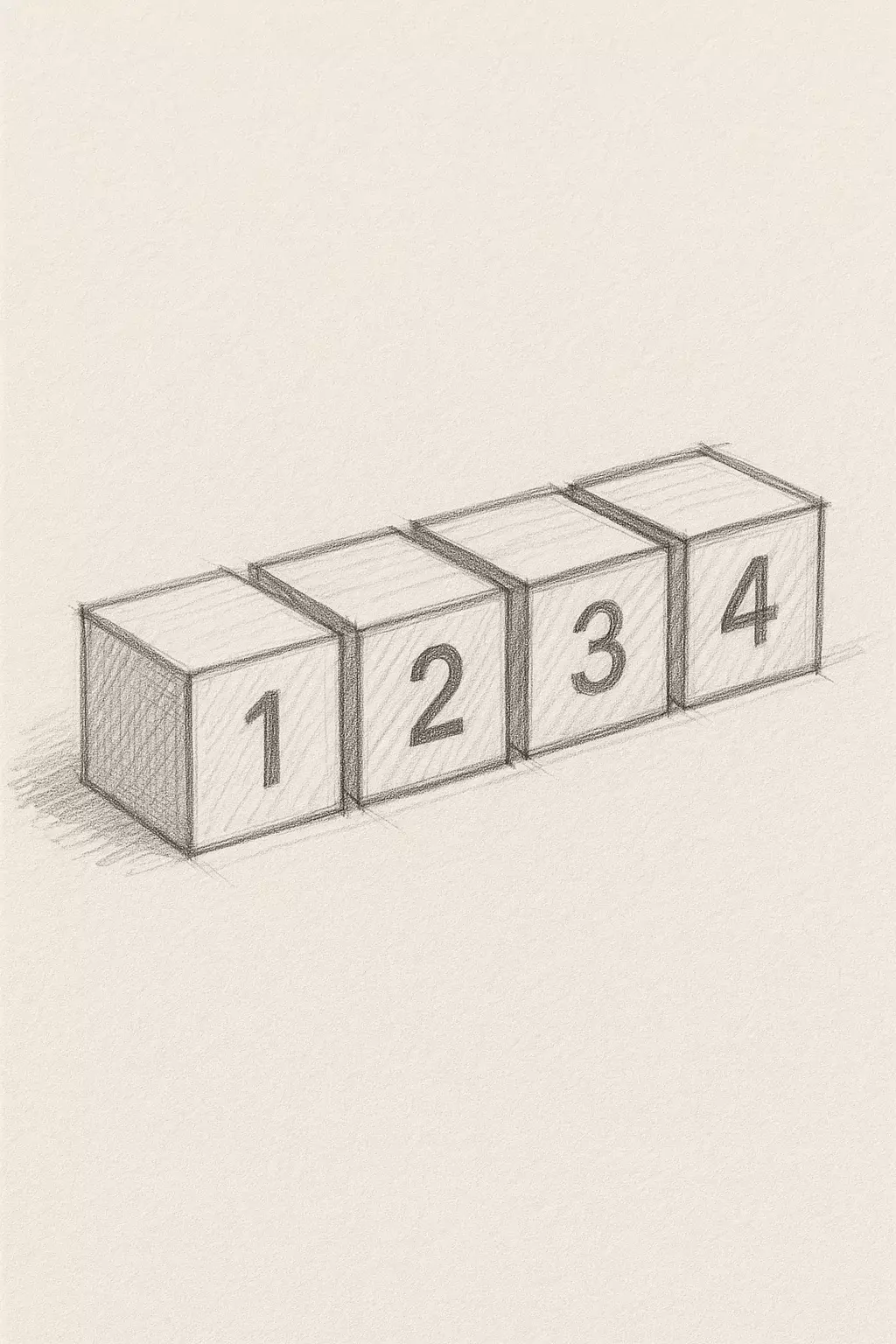
\tiny{\color{transparent}{\text{not giving the figure image won't help you to solve the problem in anyway , so if you don't have the image you should use closed form with reducing the shit}}}
Subtask ( points): (\sum n \le 10^5).
Subtask ( points): (\sum n \le 10^9).
Subtask ( points): No additional constraints