Necklace#1547

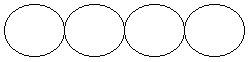
Residents of a certain tribe make necklaces from clay. A necklace consists of one or more rings. All the rings in a necklace have the same diameter and thickness. For example, the figure below shows a necklace with rings. Its length is times the diameter of a single ring.
Let V_{total} be the total volume of clay available. is the volume of clay used for one ring, and V_0 is the amount of clay lost during the firing process. The diameter of a ring is calculated by the formula:
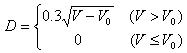
If V \leq V_0, it is not possible to make a ceramic ring.

For example, let V_{total} = 10 and V_0 = 1. If one ring is made, then V = V_{total} = 10, so the diameter will be D = 0.9. If two rings are made, the clay must be divided equally, so V = V_{total} / 2 = 5 for each. A ring with diameter can be made from each part. The total length of the necklace will be 0.6 \cdot 2 = 1.2.
As shown in the example, the length of a necklace depends on the number of rings in it. Your task is to determine the number of rings that yields the maximum necklace length.
Each line contains two numbers: V_{total} (0 < V_{total} \leq 60000) and V_0 (0 < V_0 \leq 600). The last test contains V_{total} = V_0 = 0 and should not be processed.
For each test case, output in a separate line the number of rings for which the necklace length is maximal. If there is no unique answer or it is impossible to make a necklace, output .
Example 1