Bobby Tables#9108

Little Bobby Tables stores his favourite big numbers in his database. Those numbers take a lot of memory, so he is trying to figure out a way to store them more efficiently. He noticed that in the database there is a number which has no large prime factors, and he suspects that it is of the form C^k_n, for some relatively small numbers , .
Help Bobby and check if it is really the case. Given an integer and the prime factorization of , determine whether there exist integers , such that 0 \le k \le n \le m and X = C^k_n.
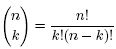
A binomial coefficient C^k_n is a number
The first line contains the number of test cases (1 \le z \le 10000). The descriptions of the test cases follow.
The first line of every test case contains two integers , (1 \le t, m \le 150000), the number of primes in the factorization of and the upper bound for output values, respectively. The second line contains primes p_i (2 \le p_i \le m), such that product of all p_i is .
The sum of the numbers in all the test cases does not exceed . The sum of the numbers in all the test cases does not exceed .
For each test case, if there exist appropriate and , output "YES" in the first line, and the values of and in the second line. Otherwise output only one line containing "NO".
Example 1